
How 3PL Companies Ensure Product Quality During Transportation
Jan 07, 2026
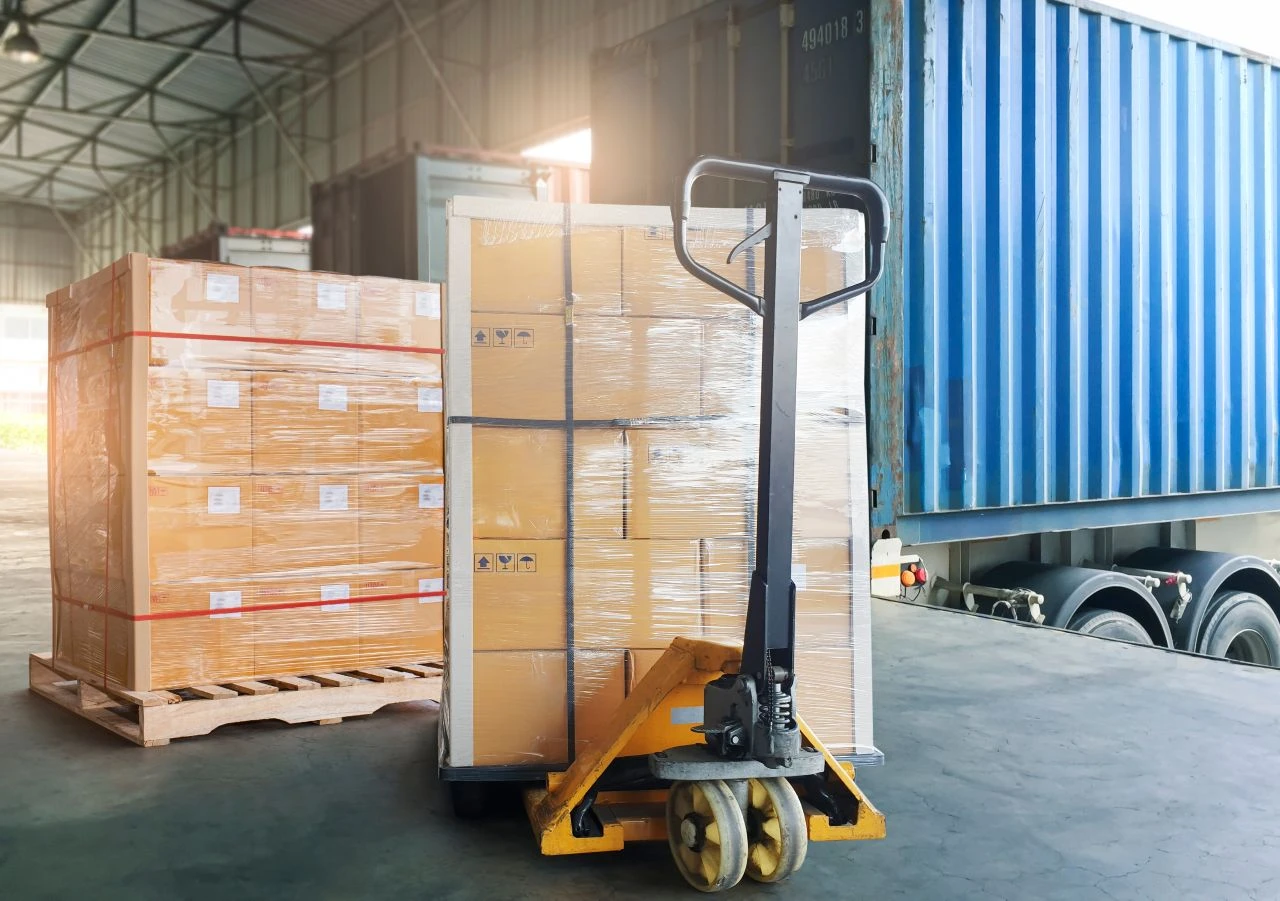
A shipment rarely “fails” in a dramatic way. More often, quality slips quietly, one warm hour on a hot dock, one pallet that shifts half an inch every mile, one trailer that isn’t as clean as it looked, one missed handoff that turns a two-day lane into a four-day one. The product still arrives, the POD still gets signed… and then you see the downstream cost: shortened shelf life, dented packaging, melted coatings, separated ingredients, cracked seals, customer complaints, chargebacks, returns, or (worst case) a safety event.
That’s why the best 3PLs treat transportation quality like an engineered system, not a hope-and-pray outcome. They design the lane, qualify the equipment, control the environment, reduce handling risk, and prove what happened with data. In regulated or sensitive categories like food, pharma, medical devices, cosmetics, high-value consumer goods, “we’ve always done it this way” isn’t a quality strategy. A real quality strategy is repeatable, documented, auditable, and built to handle exceptions.
Below is a practical, operations-level breakdown of how strong 3PLs protect product quality from origin to destination, across temperature control, physical damage prevention, sanitation, security, and compliance.
They start with a product profile and lane risk assessment
Before a 3PL can protect quality, they need to define it. “Quality” during transit can mean very different things depending on the SKU:
· Temperature range & stability limits (frozen, chilled, CRT/ambient, heat-sensitive)
· Humidity sensitivity (powders, paper goods, hygroscopic materials)
· Shock/vibration tolerance (glass, electronics, cosmetics, certain food)
· Contamination risk (food allergens, odors, chemicals, bio-risk adjacency)
· Time-at-temperature / time-in-transit constraints
· Security requirements (high-value, theft-targeted lanes)
A solid 3PL will document these requirements as part of onboarding and translate them into lane controls: mode selection, packaging spec, equipment spec, monitoring approach, handoff SOPs, and exception playbooks. This is the “design phase” of transportation quality, and it’s where most preventable failures are eliminated.
They engineer packaging and unitization to survive real transit conditions
Even perfect routing can’t save weak unitization. Transport exposes products to ongoing vibration, intermittent shock events (braking, potholes, rail switches), compression (stacking), and micro-impacts during cross-docking.
Academic research consistently shows vibration can measurably degrade perishable product quality and accelerate deterioration, meaning packaging and restraint systems aren’t optional details; they are core quality controls.
High-performing 3PLs typically support quality through packaging and palletization practices like:
· Validated packaging configurations (especially for temperature-controlled or fragile products)
· Pallet pattern + corner protection + stretch wrap standards (and verification at build)
· Appropriate dunnage (air pillows, kraft, foam, molded protection, honeycomb)
· Carton strength and stacking limits aligned to lane conditions
· Shock/vibration mitigation where needed (pads, suspension packaging, “do not double stack” controls)
· Load lock / straps / bars to prevent movement inside trailers
The best 3PLs don’t just “ship what you give them”, they pressure-test packaging assumptions with damage data, returns analytics, and lane-specific learning.
They qualify carriers and equipment (because the trailer is part of the quality system)
A 3PL that cares about quality doesn’t treat carriers as interchangeable capacity. Carrier qualification typically includes:
· Equipment standards (reefers that can hold setpoint, air-chute integrity, calibrated sensors, maintenance history)
· Sanitation standards for food and sensitive loads (clean, dry, odor-free, no incompatible prior cargo)
· Security capability (seal process, theft-prevention practices, geofence compliance where relevant)
· Service performance (on-time, claims ratios, exception responsiveness)
For physical integrity, cargo securement is also not “nice to have”, it’s regulated and safety critical. In the U.S., cargo must be secured to prevent shifting that can affect vehicle stability or cause load loss, with requirements codified in federal regulations.
A quality-focused 3PL operationalizes that into loading SOPs, training, and inspection checkpoints, because product quality and transportation safety overlap more than most shippers realize.
They apply sanitary transportation controls for food and contamination-sensitive freight
For food and feed, U.S. FDA rules establish requirements to prevent practices during transportation that create food safety risks, like inadequate refrigeration, improper cleaning between loads, and poor protection during transit.
Practically, this pushes 3PLs to implement controls such as:
· Trailer inspection checklists (cleanliness, odors, pests, moisture, structural integrity)
· Washout documentation when required
· Segregation rules (food vs. chemicals, allergens, strong odors, returns vs. outbound)
· Temperature management procedures (pre-cool, setpoint verification, continuous monitoring)
· Training and recordkeeping for shippers/loaders/carriers aligned to the rule’s expectations
For meat/poultry/egg products, government guidance also emphasizes protecting product condition across loading/unloading, in-transit storage, and transportation, reinforcing the idea that “quality” is maintained through disciplined controls at every handoff.
They control cold chain performance as a system, not just a reefer setting
Cold chain failures often come from the “boring” moments: doors open too long, pallets block airflow, product is loaded warm, reefer is set incorrectly, or a handoff happens without verifying temperature history.
Strong 3PL cold chain programs commonly include:
Pre-shipment controls
· Product pre-conditioning (don’t load warm product and expect a trailer to “fix it”)
· Pre-cool verification (trailer at setpoint before loading)
· Load plan to protect airflow (especially in reefers)
In-transit monitoring
· Digital data loggers / continuous monitoring to track actual conditions experienced by product
· Alert thresholds for deviation detection (not after arrival, during movement)
NIST has published work evaluating digital data loggers for cold-chain temperature monitoring, highlighting the importance of accuracy, stability, and traceability in continuous monitoring.
Receiving controls
· Temperature verification at receipt (and not just “feels cold” checks)
· Quarantine/hold workflows for excursions until disposition is decided
USDA guidance for transporting perishable foods by truck reinforces how temperature control directly influences quality outcomes (including chilling injury or quality degradation that may not show up until later).
They manage temperature excursions with documented triage, not guesswork
Temperature excursions happen. The difference is whether the operation can respond correctly and prove the outcome.
A mature 3PL process usually includes:
· Automatic detection (sensor triggers, lane monitoring dashboards)
· Defined escalation paths (who gets called, who authorizes action)
· Decision trees by product (hold, re-ice/recondition, re-route, return, destroy)
· Disposition documentation (what happened, how long, what temps, what corrective action)
· CAPA (corrective and preventive action): fix root causes so it doesn’t repeat
This is one of the most important “quality differentiators” between 3PLs, because the cost of a bad decision during an excursion can be catastrophic, while the cost of a smart, documented decision can be minimal.
They protect quality through chain-of-custody and security discipline
Quality isn’t only physical and thermal. For many products, integrity is also about preventing tampering, diversion, or theft-driven mishandling.
Common 3PL controls include:
· Seal control programs (seal application, seal verification at each custody change)
· Geofencing and route adherence for higher-risk freight
· Secure yards, appointment discipline, and access control
· Chain-of-custody documentation (who touched it, when, and under what conditions)
Security also ties back to food defense concepts for certain categories (intentional adulteration risk considerations), where procedural controls during transportation can reduce exposure.
They measure the right KPIs and continuously tighten the process
A 3PL that “ensures quality” can show it with metrics and audits, not marketing language. Examples of quality-focused transportation KPIs:
· Damage rate (by lane, carrier, packaging type, SKU family)
· Temperature compliance rate (percent time in spec)
· Excursion count + root cause (loading, equipment, dwell, handoff)
· Claims rate (and claim cycle time)
· On-time delivery and dwell time at nodes
Over time, these metrics drive lane re-qualification, packaging changes, carrier scorecards, and SOP updates.
A shipper’s checklist: questions to ask a 3PL about transportation quality
If you want to quickly evaluate whether a 3PL truly protects product quality, ask:
1. How do you document product handling and transportation requirements by SKU family?
2. Do you have lane qualification and seasonal risk reviews (summer/winter plans)?
3. What monitoring do you use, data loggers, real-time sensors, both, and who watches alerts?
4. What is your excursion SOP and disposition workflow?
5. How do you inspect and verify trailer sanitation for sensitive freight?
6. What load securement standards do you train to and audit against?
7. Can you share performance KPIs: damage rate, excursion rate, claims rate, OTIF?
8. How do you control chain-of-custody, seals, and access?
9. What documentation can you provide for audits or customer quality reviews?
10. How do you implement CAPA when issues repeat?
If the answers are vague, quality is probably being treated as a hope, not a system.
Quality in transit is designed, controlled, and proven
3PLs ensure product quality during transportation by treating the journey like a controlled process: qualify the lane, engineer the packaging, select the right equipment, apply sanitation and securement discipline, monitor conditions continuously, respond to exceptions with documented logic, and prove performance with data.
When these controls are in place, transportation stops being the “black box” between warehouses, and becomes a measurable, improvable extension of your quality program.
About Customs Goods
We're a nationally-recognized 3PL provider, forever curious and innovating to transform the way logistics is done. For over 60 years, we've been the strongest link in your supply chain.
This allows us to better serve our partners and one another, and it shows in everything we do, from our interactions with suppliers and customers, to what we design and create, to what we value and believe.
With our industry knowledge and a commitment to excellence, we have the know-how to navigate any logistical challenge, providing you with a competitive edge in the market.
We work closely with our customers to understand their business so that we can provide the right solution at the right time with the right approach. We offer a range of service offerings that can be tailored-made to your logistics needs.
By Natalia Kuvelas