
The Advantages of Choosing a 3PL with Industry-Specific Expertise
Dec 01, 2025
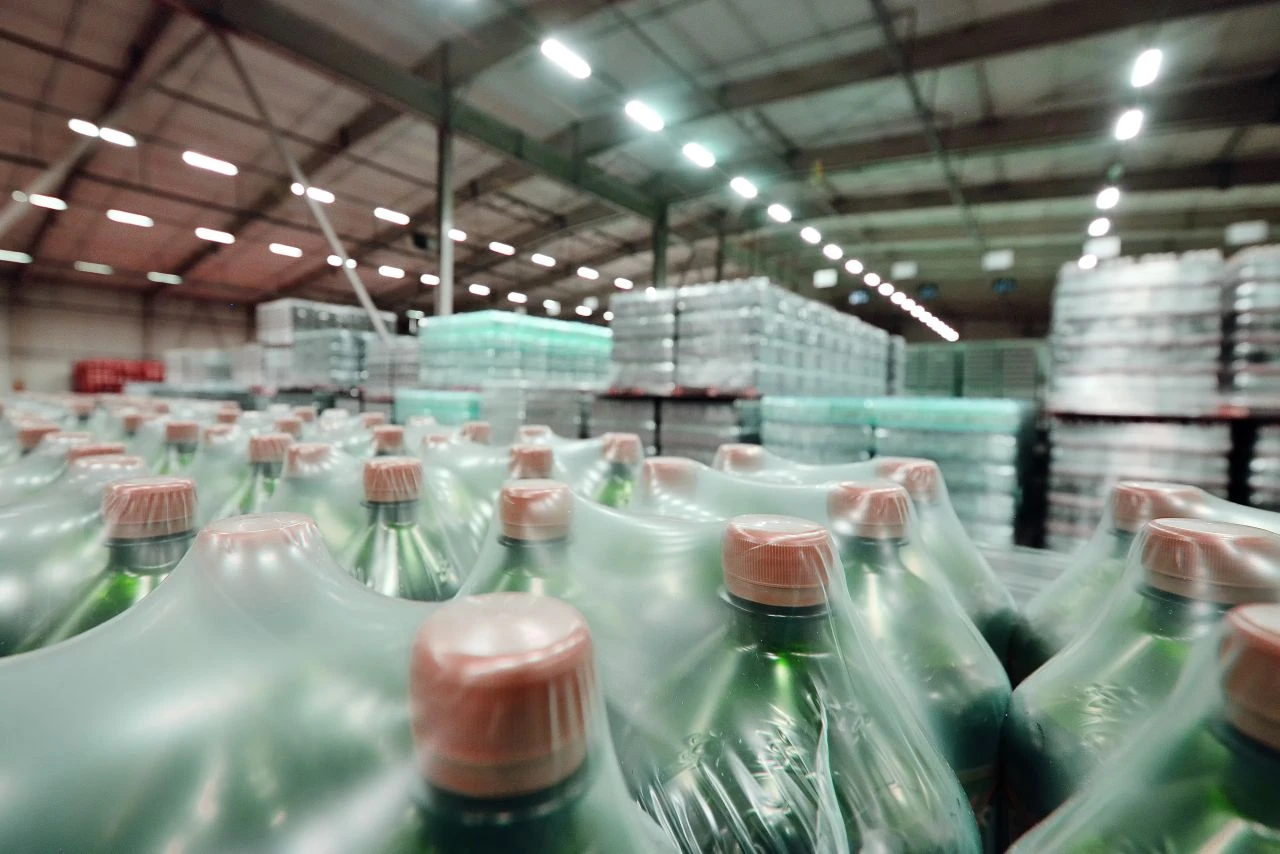
If you had to ship strawberries, specialty batteries, and vaccines, would you put them all on the same process, measured by the same KPIs, and audited to the same standard? Of course not. Yet many organizations still evaluate their logistics partners as if “3PL is 3PL.” The reality: logistics is not one business, it’s a portfolio of highly regulated, sector-shaped disciplines. Picking a third-party logistics provider (3PL) with industry-specific expertise isn’t just a preference; in many sectors it’s the difference between compliant vs. non-compliant, profitable vs. costly, resilient vs. fragile.
What “industry-specific expertise” really means
A specialized 3PL pairs sector knowledge + compliant processes + fit-for-purpose tech. That can include:
· Staff trained on the exact regulations and standards for your vertical (e.g., FSMA sanitary transport for food; DSCSA traceability for pharma; PHMSA rules for hazardous materials).
· Facilities and equipment matched to the product (e.g., validated cold rooms and continuous temperature monitoring for vaccines; segregated storage for Hazmat; allergen controls for food). For vaccines, CDC’s toolkit outlines continuous monitoring, calibrated devices, and emergency procedures, practices specialized 3PLs build into SOPs.
· Information systems configured to your risks and workflows (e.g., serialization and interoperable traceability for DSCSA; dangerous-goods documentation; temperature data logging integrated with WMS/TMS).
· Audit readiness, documented training, CAPA, and recordkeeping that align with regulators’ expectations for your sector (FDA, USDA, PHMSA, etc.).
This isn’t nice-to-have: it’s what keeps shipments moving, customers happy, and auditors satisfied.
Advantage 1: Compliance-by-design (reduce regulatory risk)
Regulations aren’t uniform. A 3PL that lives and breathes your industry embeds compliance into day-to-day execution:
Food & Beverage: Under the FDA’s FSMA Sanitary Transportation of Human and Animal Food rule, shippers, loaders, carriers, and receivers must use sanitary practices, with requirements for equipment, temperature control, records, and training. Specialized food 3PLs operationalize these elements, think pre-cooled trailers, seals, continuous temperature logging, and shipper-specified setpoints.
Pharmaceuticals & Life Sciences: The Drug Supply Chain Security Act (DSCSA) requires interoperable, electronic, package-level traceability to deter counterfeit or diverted drug products. Sector-savvy 3PLs ensure they can ingest/produce serialized events, reconcile exceptions, and support verification requests.
Vaccines & Ultra-Cold Products: CDC’s Vaccine Storage and Handling Toolkit details purpose-built units, digital data loggers (DDLs), alarmed monitoring, and emergency plans, capabilities that best-in-class healthcare 3PLs standardize across sites.
Hazardous Materials: PHMSA’s Hazardous Materials Regulations (HMR; 49 CFR 171–180) govern classification, packaging, marking, labeling, documentation, and training across modes. Hazmat-competent 3PLs maintain DG specialists, compliant packaging workflows, and audit trails to avoid fines and incidents.
A specialized 3PL lowers the probability and impact of non-compliance, minimizing fines, product loss, and brand damage.
Advantage 2: Product integrity and safety (protect quality and patients/consumers)
Industry-specific practices preserve product quality and safety:
Cold chain integrity: Academic literature consistently shows that end-to-end temperature control (process + packaging + monitoring) is decisive for perishable foods and biopharma. Specialized 3PLs use validated pack-outs, route planning that limits dwell, and continuous telemetry.
Food safety controls: USDA/FDA guidance emphasizes monitoring refrigeration units, checking for breakdowns, and using time-temperature indicators when available, procedures built into food 3PL SOPs.
Recall readiness: With serialization (DSCSA) and batch/lot controls, specialized pharma 3PLs execute targeted holds and withdrawals quickly, reducing recall scope and cost.
When your 3PL already operates to the letter of the standards, integrity isn’t an afterthought, it’s the default.
Advantage 3: Measurably better performance (speed, service, and cost)
Academic studies of logistics outsourcing find consistent relationships between 3PL engagement and improved service, flexibility, and cost outcomes, especially when providers bring domain-specific know-how and technology.
How that shows up in the real world:
Fewer errors and chargebacks due to sector-specific SOPs (e.g., retailer labeling for omnichannel, GDP-aligned handling for drugs, allergen segregation for food).
Faster cycle times because process design matches the product: kitted medical devices flow differently than bulk beverages; hazmat pick/pack follows DG checks that are embedded, not bolted on.
Right-sized inventory as specialized 3PLs tune slotting, safety stocks, and replenishment logic to demand patterns typical for your category (e.g., seasonality for confections; launch curves for Rx/OTC).
The result is speed without shortcuts; service levels rise while risk falls.
Advantage 4: Fit-for-purpose technology (from serialization to sensors)
Specialized 3PLs shape their tech stacks to sector needs:
Traceability and serialization tools aligned to DSCSA for pharmaceuticals (event capture, EPCIS exchange, verification).
Temperature monitoring and alarms are integrated into WMS/TMS for cold chain, enabling proactive intervention before excursions occur, consistent with CDC guidance.
Dangerous goods modules that enforce PHMSA packaging/labeling/documentation rules and training expirations at the transaction level.
Cyber supply-chain risk controls following NIST SP 800-161r1, protecting EDI/API integrations, partner credentials, and device telemetry from compromise.
The tech isn’t just “nice software.” It’s how specialized 3PLs hard-code compliance and quality into every move.
Advantage 5: Sustainability that aligns with freight science
Many shippers pursue environmental KPIs (Scope 3, fuel/CO₂, local air quality). Specialized 3PLs often participate in programs like EPA SmartWay, using lane-level benchmarking and vetted carriers to cut emissions and cost. Since 2004, SmartWay partners have helped avoid 170 million metric tons of CO₂, among other pollutants, evidence that sustainability and efficiency can move together.
Advantage 6: Sector-specific risk management (anticipate, don’t react)
Risk profiles vary dramatically across industries:
Pharma: counterfeiting/diversion risks → serialization, verification, and tight custody controls (DSCSA).
Food: spoilage/contamination risks → FSMA sanitary transport practices and temperature control.
Hazmat: incident, environmental, and worker-safety risks → HMR compliance, segregation, and emergency response planning.
All industries: third-party cyber risks → NIST C-SCRM practices across vendors and systems.
Specialized 3PLs bring risk libraries and playbooks proven in your exact category, so you’re not learning on live freight.
How specialized 3PLs lower total landed cost
“Specialized” can sound expensive, until you add up the avoided costs:
Waste and rework avoided: Cold-chain breaks, mis-labeled hazmat, or non-compliant food loads produce rejections, re-packs, or total loss. Tight controls lower write-offs. (See CDC temperature-control emphasis; FSMA training/records.)
Fewer penalties and claims: DG misdeclarations, incomplete documentation, or temperature excursions trigger fines and claims a specialized 3PL help prevent.
Process efficiency: Academic reviews of logistics outsourcing show improved transportation effectiveness and inventory control when 3PL capabilities and shipper needs are aligned, precisely what industry expertise delivers.
Faster launches and fewer stockouts: Purpose-built SOPs reduce time-to-first ship for new SKUs and help keep on-shelf availability high in categories with strict handling.
The cheapest rate isn’t the lowest cost. The right 3PL model is.
How to evaluate a 3PL industry expertise (a practical checklist)
Regulatory alignment
Show your SOPs and training maps to FSMA (food), DSCSA (pharma), or HMR (hazmat). How are changes tracked?
Provide recent audit results or third-party certifications relevant to my sector.
Facilities & equipment
Document your temperature-controlled capabilities (ranges, mapping/validation, backup power, DDLs, alarms) consistent with CDC guidance.
For hazmat, show storage/segregation plans and emergency procedures.
Technology & data
Can your systems capture and exchange the data my sector requires (e.g., EPCIS for DSCSA, automated temp logs, DG documentation)?
U.S. Food and Drug Administration
How do you manage cyber supply-chain risk across partners and integrations (align with NIST SP 800-161r1)?
Operations & KPIs
Which KPIs do you use that are specific to my category (e.g., excursions per 10k shipments, DG incident rate, FSMA training completion, recall time-to-isolation)?
Share examples of process improvements implemented for customers like me.
Sustainability
Are you participating in EPA SmartWay? How do you benchmark and improve carrier emissions?
Continuity & resilience
What is your business continuity plan (backup power, disaster recovery, alternate sites) for my product’s sensitivity?
About Custom Goods LLC
Who are we? Custom Goods is a nationally recognized 3PL with more than 60 years in warehousing, fulfillment, and transportation. We’re a people-powered organization, curious, innovative, and committed to transforming how logistics gets done. Our teams live by servant leadership, integrity, resilience, and an intense safety focus, earning the trust of partners coast-to-coast through measurable excellence.
How do we do it. From meticulous planning and inventory management to efficient warehousing and transportation, we tailor solutions to each customer’s needs. Our diversified service portfolio and sector experience allow us to design the right solution at the right time with the right approach, maximizing operational efficiency and competitive advantage.
Ready to analyze the fit? Let’s map your industry into the right 3PL solution.
Whether your priority is FSMA-compliant food fulfillment, DSCSA-ready pharma distribution, hazmat handling under PHMSA, or omnichannel retail SLAs, Custom Goods can help you operate industry-specific best practices and prove it with data. Let’s pressure-test your current network against sector standards, identify risk and cost hotspots, and build a roadmap that raises service while reducing total landed cost.
Talk to Custom Goods: We’ll bring the sector playbooks, the compliance engine, and the continuous-improvement mindset your operation deserves.
By Christian Herc