
The Real Cost of Heavy Cargo Delays: Extra Touches, Dwell Time, and Recovery Moves
Jun 04, 2026
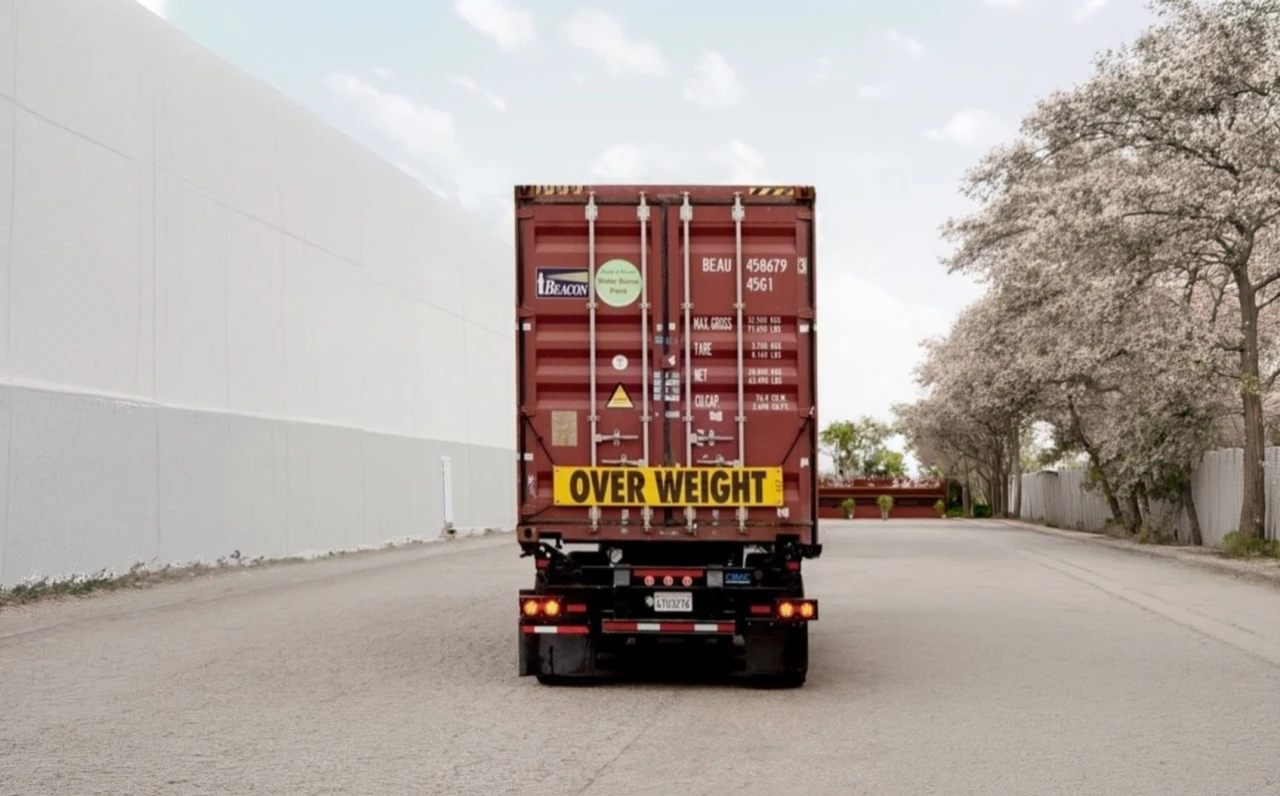
A missed pickup window for heavy cargo rarely stays a transportation problem. It quickly becomes a problem of labor, equipment, space, and recovery.
When a shipment is oversized, overweight, high-value, or tied to a strict delivery window, one delay can trigger a chain reaction. The cost isn't just a late arrival rate; it's everything required to recover: additional handling, dwell time, rework, and moves that were never part of the original plan. When the original plan breaks, recovery gets expensive fast.
The real question isn't "How late is the freight?" It's "How much additional work does this delay create before the freight can move again?"
Why Heavy Cargo Delays Cost More
Heavy cargo has fewer backup options. A missed appointment for standard palletized freight is frustrating, but it can usually be rescheduled with limited disruption. Heavy cargo is less flexible.
It often requires high-capacity forklifts, cranes, rigging, flatbeds, lowboys, or heavy-haul carriers - plus reinforced staging areas, permits, route planning, and precise appointment coordination. The operating window is tight. When one part of the plan changes, the rest may have to be rebuilt: the warehouse restages freight, transportation rebooks a specialized carrier, the import team recoordinates documentation, customer service manages revised ETAs, and finance tracks delay-related charges.
The Federal Highway Administration has noted that congestion increases travel time, reduces reliability, and raises transportation costs - with those costs ultimately passed to shippers. For heavy cargo, reliability costs are harder to absorb because specialized equipment and limited carrier availability leave fewer low-cost recovery options. Unreliability has a measurable cost, and for heavy cargo, that cost is larger because recovery is harder.
The Hidden Cost Stack
The visible delay is only the first layer. The real costs appear in the operational stack behind it.
Dwell Time
Dwell time is the time freight spends sitting in a terminal, port, yard, or warehouse before the next move. For heavy cargo, it's more than idle time - it consumes valuable space, blocks staging areas, and creates scheduling pressure downstream. The Bureau of Transportation Statistics tracks dwell time as a recognized port performance factor, not just an internal frustration.
When heavy cargo dwells longer than expected, the surrounding plan shifts. Labor gets reassigned, dock schedules change, outbound transportation gets rebooked. If the freight is tied to a production line, construction project, or installation schedule, every extra day increases downstream pressure.
Extra Touches
An extra touch is any unplanned physical handling — moving cargo to a new staging area, repositioning for inspection, unloading and reloading after a missed pickup, or restaging after a delayed outbound move. For heavy cargo, every touch means more labor, more equipment time, more safety exposure, and more damage risk.
This is one of the easiest costs to underestimate. A logistics plan may account for receiving, staging, and loading — but not two extra yard moves, an unplanned reload, or a second staging cycle because the first delivery window was missed. The fewer times heavy cargo is touched, the more controlled the cost and risk profile.
Rework
Rework is the operational effort required to rebuild the plan after a delay. It doesn't always appear as a single invoice line, but it consumes real time and resources: rebooking drayage, revising appointments, updating ETAs, replanning warehouse labor, rescheduling dock doors, and recoordinating with brokers, carriers, and exam facilities.
The more complex the cargo, the more people are pulled into exception management. A delay that looks simple from the outside can create hours of internal coordination across operations, compliance, transportation, warehouse, customer service, and finance.
Recovery Moves
Recovery moves are the additional transportation or repositioning steps required after the original plan fails — yard transfers, emergency drayage, facility-to-facility repositioning, or carrier replacement. For heavy cargo, these are especially expensive because the right equipment may not be available on short notice. A missed flatbed, lowboy, or crane appointment may mean a more expensive replacement, or no replacement at all within the needed window.
Recovery moves also create new risk: additional handling increases the chance of damage, documentation errors, and missed handoffs. If the cargo is under customs control or tied to an exam, even the recovery move requires tight coordination. This is where margins disappear.
Where the Costs Show Up
Heavy cargo delay costs rarely appear as one line item. They spread across departments:
- Transportation: missed pickups, rebooked trucks, layover charges, higher-cost replacement capacity
- Warehousing: blocked space, extra labor, restaging, additional equipment use
- Customs/CES: exam preparation, cargo presentation, documentation coordination, facility handling fees
- Customer service: escalations, revised timelines, increased communication volume
- Finance: storage, accessorials, demurrage, detention reconciliation
Downstream costs can be harder to measure but more damaging — missed production windows, delayed installations, postponed project milestones. Heavy cargo delays don't stay confined to the original shipment.
How to Reduce These Costs Before They Escalate
Plan the handoffs before the cargo arrives. Each party - port, terminal, CES, warehouse, carrier, final delivery — should know what's arriving, what equipment is required, what documentation is needed, and what happens if the cargo is delayed. The stronger the handoff plan, the faster the team responds when something changes.
Reduce unnecessary touches. Heavy cargo should be staged with the next move in mind, not placed wherever space is available. That means accounting for lift requirements, outbound direction, exam possibility, and carrier access. Good staging reduces extra movement. Good visibility reduces unnecessary handling.
Build a recovery plan before the exception happens. A recovery plan should answer practical questions in advance: Where can cargo be staged if pickup is missed? Which carriers support heavy cargo on short notice? Who coordinates with the broker if an exam is required? What charges need to be monitored immediately? Waiting until freight is already delayed creates more pressure and fewer options.
Work with a 3PL that coordinates across the cost chain. Heavy cargo delays become more manageable when warehousing, transportation, and customs exam support are coordinated rather than siloed. A 3PL with experience across these functions can reduce friction by controlling where freight sits, who handles it, what equipment is needed, and how quickly recovery begins — especially in port-adjacent and import-heavy operations.
Final Takeaway
Heavy cargo delays are cost multipliers. The goal shouldn't just be moving freight from origin to destination - it should be controlling handoffs, reducing unnecessary touches, and building a recovery plan before exceptions occur.
Custom Goods helps companies address these challenges through an integrated logistics approach. With warehousing, transportation coordination, and CES support, Custom Goods is positioned to reduce friction, protect timelines, and respond effectively when heavy cargo doesn't move as planned. If your team is evaluating how to reduce delay-related costs and recovery moves, it may be time to explore how Custom Goods can support a more controlled heavy cargo logistics strategy!